
ARDUINO-BASED VOICE-CONTROLLED WHEELCHAIR WITH ADJUSTABLE SPEED CONTROL

Manager
ARDUINO-BASED VOICE-CONTROLLED WHEELCHAIR WITH ADJUSTABLE SPEED CONTROL: A Comprehensive Guide
Last updated: October 25, 2026
Introduction
Welcome to our tutorial on ARDUINO-BASED VOICE-CONTROLLED WHEELCHAIR WITH SPEED CONTROL! This topic has been getting a lot of interest, and we are excited to share some valuable insights with you.
What is an ARDUINO-BASED VOICE-CONTROLLED WHEELCHAIR WITH ADJUSTABLE SPEED CONTROL?
ARDUINO-BASED VOICE-CONTROLLED WHEELCHAIR WITH ADJUSTABLE SPEED CONTROL is an exciting topic that touches on many aspects of modern life. Even if you’re an expert in Arduino-based voice-controlled wheelchairs with adjustable speed control, you can still find plenty of useful information in this article.
KEY FEATURES OF AN ARDUINO-BASED VOICE-CONTROLLED WHEELCHAIR WITH VARIABLE SPEED CONTROL
What is an Arduino-based voice-controlled wheelchair with adjustable speed control? - Summary of the main points
What is the importance of an Arduino-based voice-controlled wheelchair with adjustable speed control? - exploring the importance
Current Trends—What's new regarding the Arduino voice-controlled wheelchair with adjustable speed control?
How to get involved—How to begin
Featured Products
Here are some products related to ARDUINO-BASED VOICE-CONTROLLED WHEELCHAIR WITH ADJUSTABLE SPEED CONTROL:
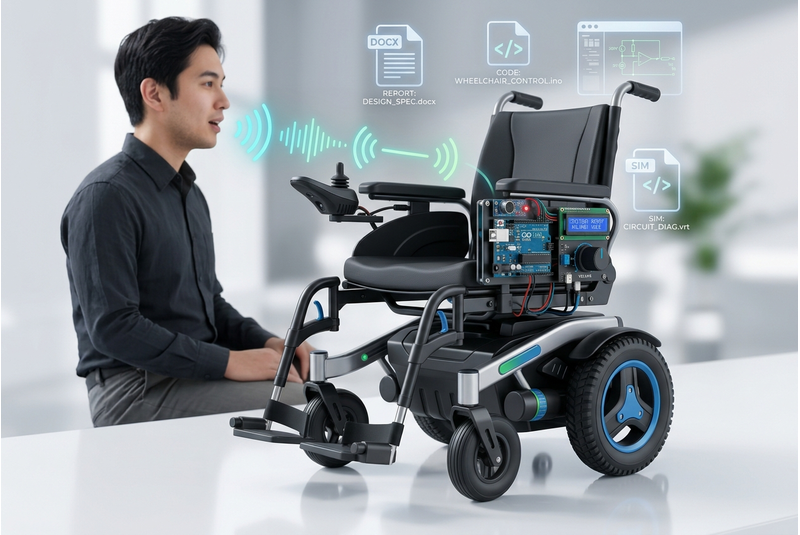
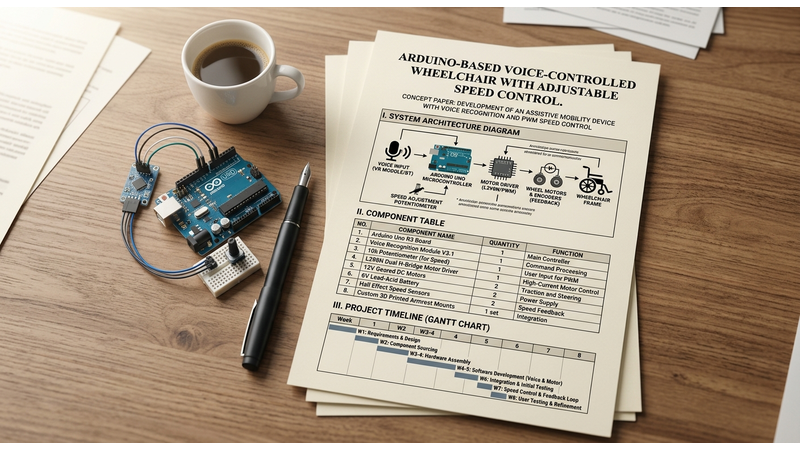
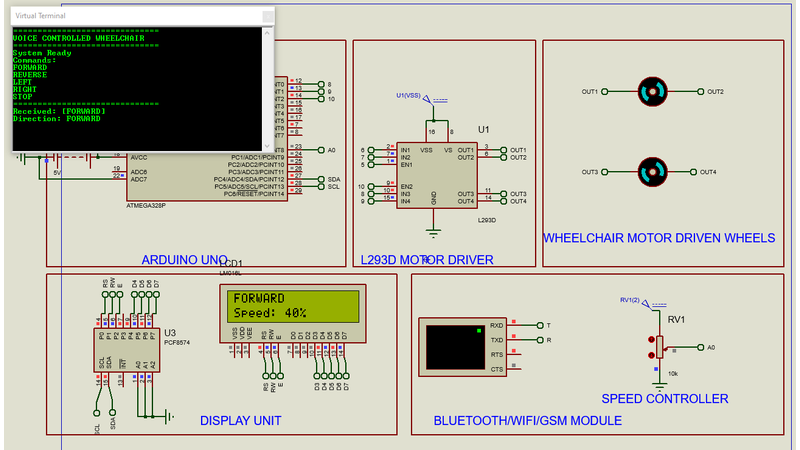
VOICE-CONTROLLED ARDUINO-BASED WHEELCHAIR WITH ADJUSTABLE SPEED CONTROL - Make a complete project package for the design and simulation of the Arduino-based voice-controlled wheelchair with speed-adjustable control. It is suitable for individuals suffering from mobility impairment but having limited hand/arm movement. Navigation is possible through the use of simple voice commands like FORWARD, REVERSE, LEFT, RIGHT, and STOP. The user will be able to set his speed level from 0% to 100% with the help of the potentiometer, and the speed and command level are displayed by the LCD. SAFETY FEATURES:
Automatic motor stop for invalid commands.
This project package is perfect for all engineering students, researchers, professors, and developers engaged in the development of assistive devices, embedded systems, and robotics applications. It provides a cheap platform that could later on be enhanced with the addition of other features like obstacle detection, GPS tracking, and battery monitoring.
AUTOMATED GREENHOUSE MONITORING AND CONTROL SYSTEM USING IoT: The Automated Greenhouse Monitoring and Control System is a complete IoT solution for modern farming that aims to automate the necessary greenhouse operations. The system uses intelligent sensors and microcontrollers to constantly monitor and adjust the environmental conditions of the greenhouse.
Key Features
Automated Irrigation System—It uses a moisture sensor to monitor the moisture level of soil and activates the water pump if the moisture falls below certain thresholds. This system helps in saving water, and once the optimum level is achieved, it turns off the water pump.
- Temperature Sensing and Cooling—Keeps a check on the temperature in the greenhouse and turns on the cooling fan when the temperature crosses 35° Celsius.
- Air Quality Management—It uses the Carbon Monoxide (MQ-7) sensor to monitor the presence of CO gas and turns on the extractor fan to remove extra CO from the surroundings.
- Remote Monitoring and Operation Dashboard—The system offers a web interface that can be accessed through any web browser that is on the same network as the dashboard.
- Microcontroller: ATmega328P (main microcontroller) + ESP8266 (WiFi interface)
- Sensor Modules: Soil Moisture Sensor, Temperature Sensor (potentiometer equivalent), MQ-7 Carbon Monoxide Sensor
- Actuators: Water Pump, Fan Cooler, Extractor Fan, Lighting Module, Spray Module
- Display: LCD display for visualizing data locally
- Networking: WiFi supported for remote control using a web browser
- Power Supply: Compatible with any typical greenhouse power supply system
The entire package comprises all the circuit diagrams, microcontroller code (Arduino IDE), web interface code, detailed documentation, and assembly instructions. It’s ideal for anyone interested in agricultural technology, engineering students, or business owners who operate greenhouses and need to use intelligent farming techniques.
Fault Detection and Protection System for Power Distribution—Project Starter Kit—This project starter kit will be of great help for creating an automatic fault detection and protection system for power distribution systems. The project kit will be beneficial for engineering students and other professionals in the field of power system protection.
The system combines short-circuit, overload, and open-circuit detection with automated fault isolation, real-time monitoring, and remote control. The system also consists of solar power backup for critical loads. Everything required for the implementation of the system is provided in this kit.
Aspects included in the documentation are as follows:
- System Design: Design details of the system with the help of the Atmega328P microcontroller, NodeMCU (ESP8266), and SIM800L GSM module.
- Fault Detection Method: A method used for detection of short-circuits, overload, and open-circuits.
- Protective Measures: Fault isolation, switching of protective measures with relays, and remote control.
- Solar Back-Up Integration: How to integrate the solar power system to cater to the critical loads.
- Remote Monitoring and Control: Ways of creating an interactive web interface with the help of the NodeMCU for real-time monitoring, fault location, and remote control of devices such as transformers and substations.
This pack will prove to be invaluable to anyone who intends to use it for their final year project or for conducting research or experimenting with smart grid technology by following the given instructions and coding.
Conclusion
In conclusion, the voice-controlled wheelchair designed using Arduino microcontrollers, which are capable of regulating speed, proves that there is an opportunity to utilize embedded systems in creating economical mobility aids. Through incorporation of voice control, variable speed control, LCD display, and safety aspects, the work gives a solid basis for creating assistive devices. Additionally, it gives learners in their final year of study and those carrying out research on Arduino programming a great chance to learn.
Further Reading
Tags
Featured Products

AUTOMATED GREENHOUSE MONITORING AND CONTROL SYSTEM USING IOT
The Automated Greenhouse Monitoring and Control System is a complete IoT solution designed to...

ARDUINO-BASED VOICE-CONTROLLED WHEELCHAIR WITH ADJUSTABLE SPEED CONTROL
This digital product provides a complete, ready-to-use project package for designing,...

Fault Detection and Protection System for Power Distribution – Project Starter Kit
This comprehensive project kit is a solution for developing an automated fault detection and...